
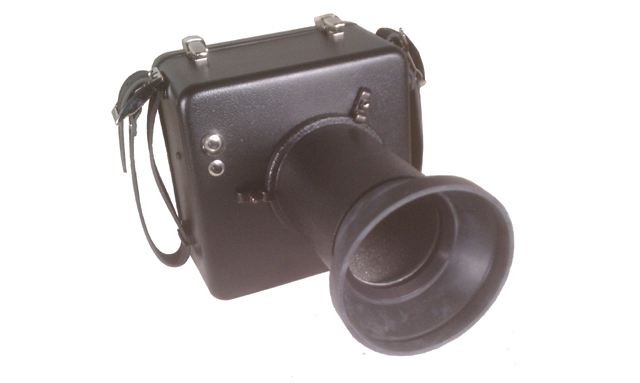
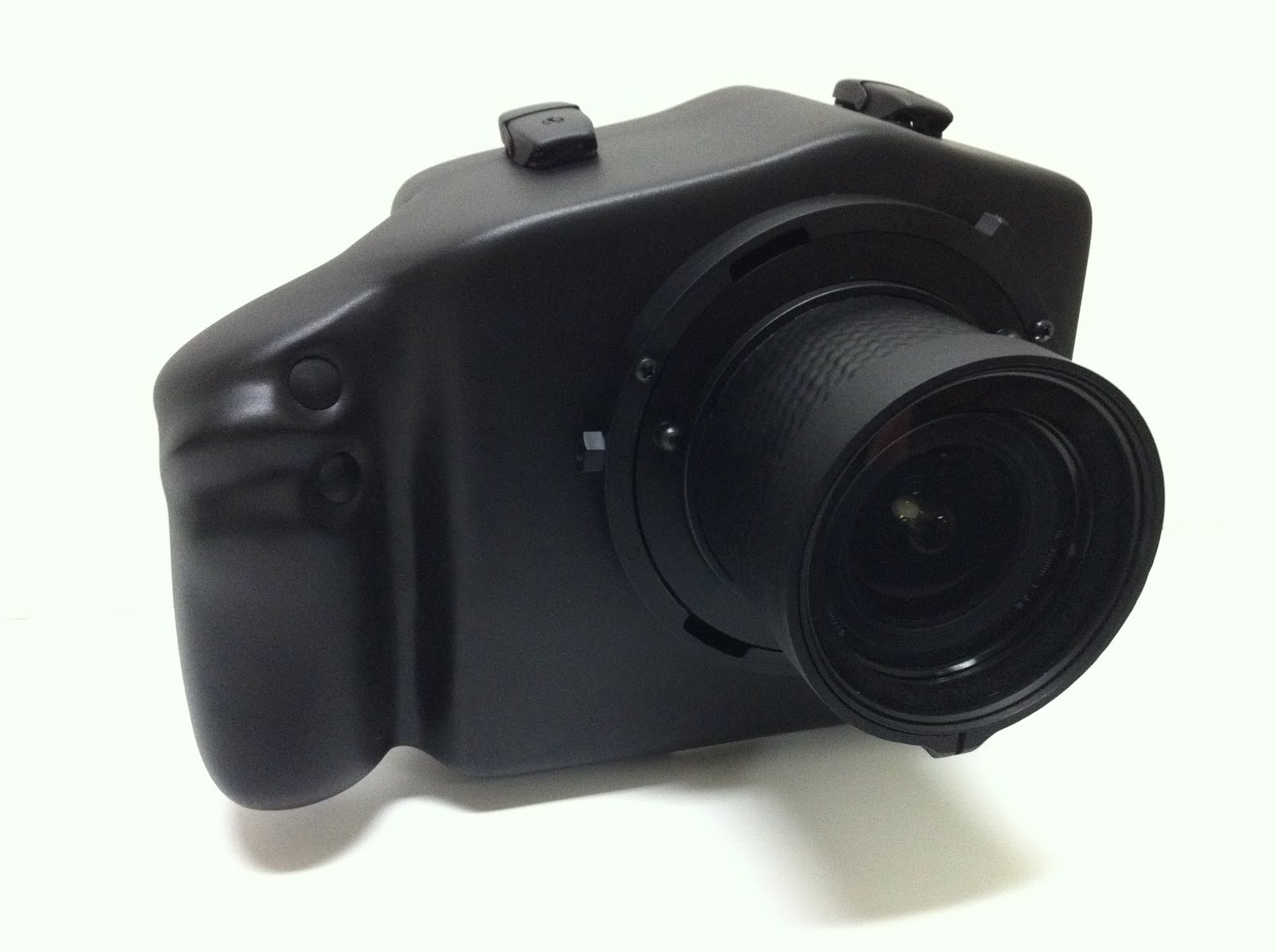
The sound blimp is the quintessential production stills photographer’s tool. It is a sound proof enclosure to make the stills camera almost entirely silent. This device means that a photographer can shoot during takes without his or her shutter sound being picked up by the sensitive microphones used by sound recordists.
Sound blimps are also often used by court photographers, classical music and wildlife photographers for when it is absolutely imperative that the slapping sound of the shutter does not disturb the proceedings. I’ve worked almost entirely without one for most of my career as a unit stills photographer, but it makes the job substantially more difficult than it already is. My main reticence to acquire one was the unwieldy nature of the Jacobson Blimp, which up until the last couple of years was the only option.
There has been a lot of discussion lately about whether sound blimps will soon become obsolete with advancing camera technology. To my knowledge, at this time there is no completely silent dSLR camera model and even the fabled quietness of the Leica M9 rangefinder is not sufficient to meet the requirements of most film sets. High end point and shoot cameras can often be rendered silent but in my opinion the image quality these cameras can produce is not yet sufficient to be relied on for creating publicity images on film sets. Nikon and Canon Pro series cameras now have “silent mode” which shoots without the manual shutter slap, but reports from users of these bodies consistently mention it not being an effective solution.
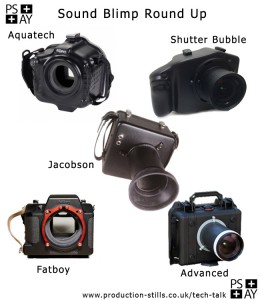
meet the blimps: click to enlarge
I’ve previously written a detailed round up (including links to available videos) of all the sound blimp options in TT 15 Sound Blimp Round Up (LINK). This article will serve as a simplified rendition of the information in that article. In case you’re wondering, I have no commercial relationship with any of the manufacturers, but I’ve liaised with most over the last couple of years and that information has informed this article.
The table below summarises all of the available information on each of the 5 available or soon to be available sound blimps. In the future, I’ll be looking to test all the sound blimps under the same conditions – subject to the manufacturers being prepared to supply me with test equipment – I’ve got the team on standby for just this purpose!
I’ll welcome comments and suggestions for updates to this information.
Notes
US Prices correct at December 2013 via manufacturer’s web sites.
Aquatech Blimps are now available for purchase and for hire in the UK via Fixation
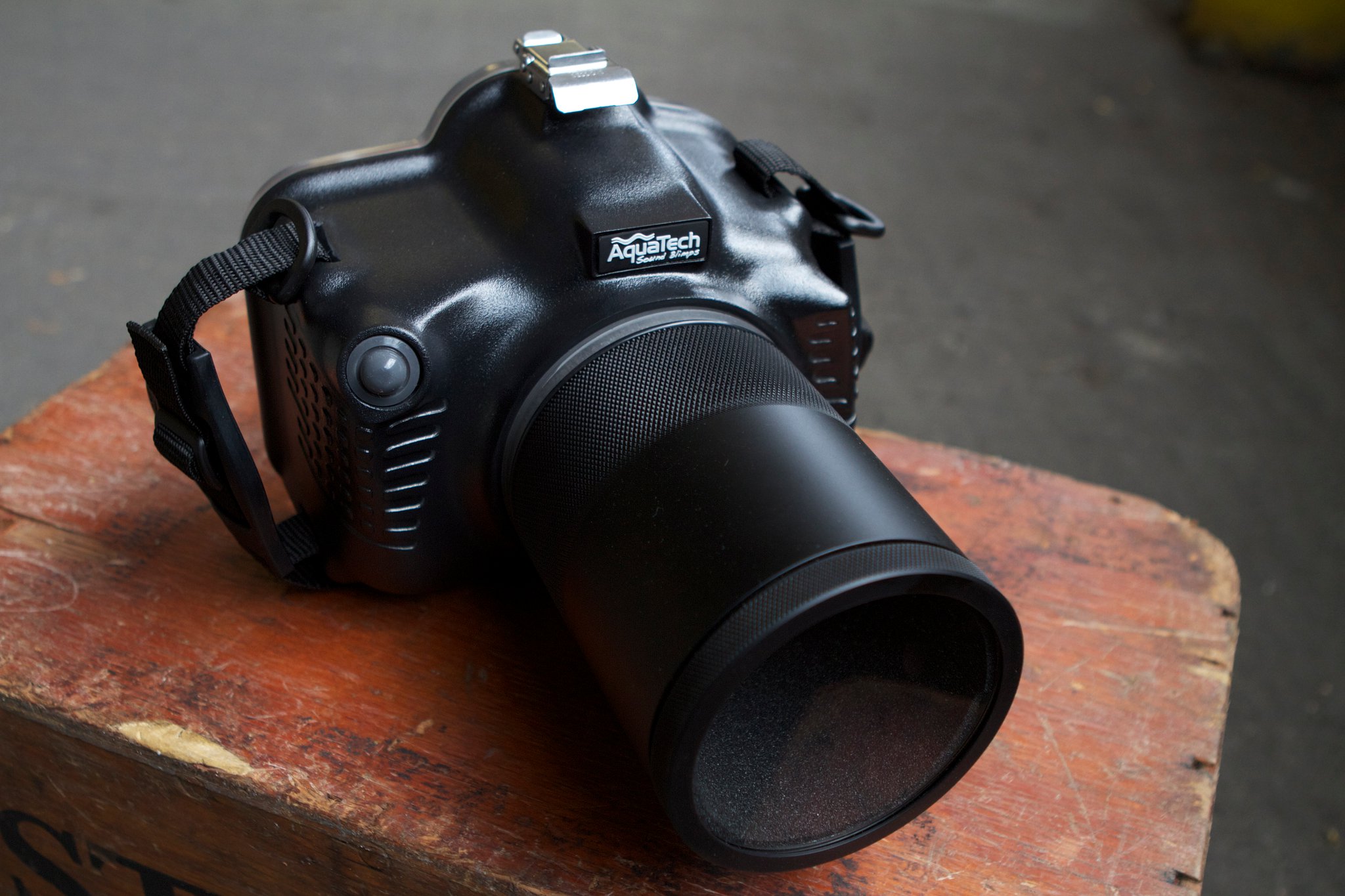
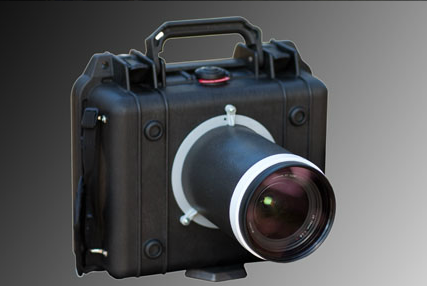
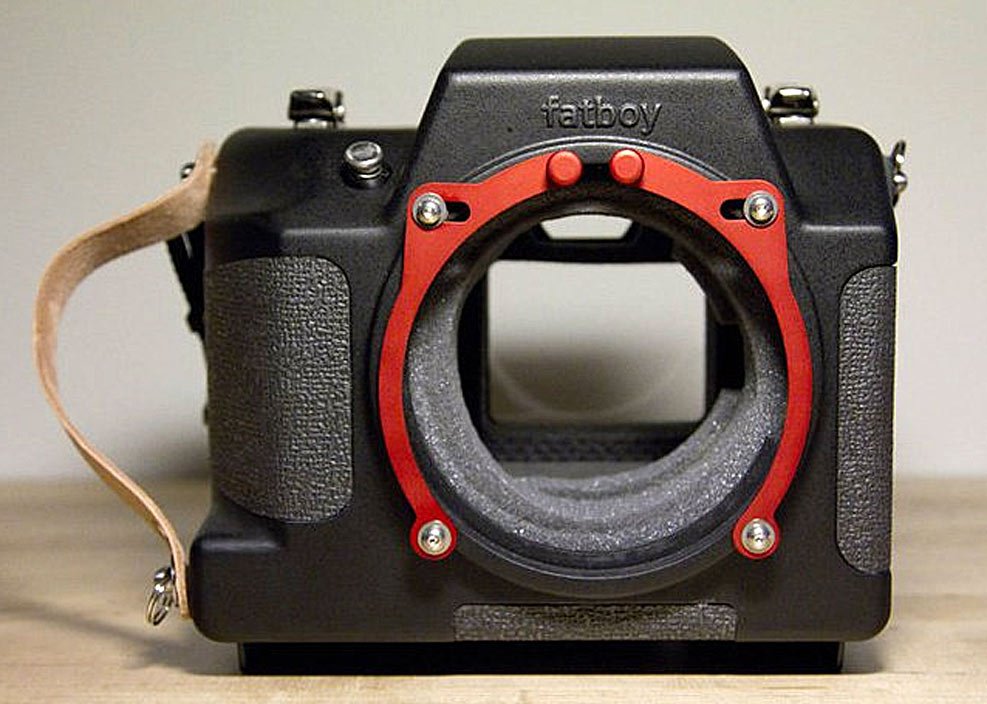
| Product | Price $USD |
Weight | Supported Cameras | Accessible camera functions | Availability |
|---|---|---|---|---|---|
| Jacobson Sound Blimp website |
Blimp $1000 Lens tubes inc B&W/ Schneider Filters $300-$350 |
1.4kg /3lb | Canon and Nikon All models | 2 stage shutter LCD Screen |
Available |
| Aquatech Sound Blimp website |
Blimp $1195 (5D/D800) $1295 (1D/D4) Lens Tubes inc B&W/ Schneider Filters $375-$495 |
1kg /2lb to 1.26kg/2lb, 12oz |
Canon 7D 5D Mk II 1D Mk II 1D Mk III 1D Mk IV Nikon D700 D300/D300s D4/D3/D3s/D3x |
2 stage shutter LCD Screen Back Focus Control Wheel (aperture/shutter) Canon “Q†button |
Available |
| Advanced Sound Blimp (no longer operating) |
Blimp $774 Lens Tubes $171-189 |
1.4kg /3lb | Canon 5D Mk II 1Ds Mk III and similar |
Shutter (wireless), LCD Screen |
Ceased? |
| Shutterbubble website |
Blimp $950 Lens Tubes all lenses $375 |
1kg /2lb | Canon and Nikon all bodies with or without grip/motor drive | 2 stage shutter LCD Screen |
TBA |
| Fatboy Sound Blimp website | Blimp $675 Lens Tubes $285-$325 without filters |
760g/1.68lb | Canon 50D 7D 5D series Nikon D800, D700 D300s D200 D7000 |
2 stage shutter LCD Screen |
Available |


thanks for the comparisons among the sound blimps on the market today. I think I will wait for the fatboy now…..
I can see why that would be a tempting option. I’m looking at going to the Aquatech. Thanks for your feedback!
How soundproof does a blimp need to be? I am shooting stills for a production for the first time this weekend and am making my own blimp. From what i see on youtube of the fatboy and jacobson, even the professional ones are not completely soundproof. If they can be picked up on the mics of the cameras for those videos wont they be picked up on a set? Just wondering how it all works and what level of soundproofing is needed.
Hi CL! Thanks for your question. The only definitive answer to how quiet a camera needs to be on set is “Quiet enough to satisfy the sound recordist”.
That probably doesn’t sound very helpful, but based on conversations I’ve had on set with many sound recordists they all vary. Some recordists have told me (and other photographers I’ve spoken to) that the Jacobson Blimp is not quiet enough for them and others have said that the Pelican based options will do the trick.
Your best bet is to talk to the recordist on set, and if possible test with them before shooting commences. Obviously there are a number of variables including the effectiveness of your blimp as well as your position on set in relation to the microphones as well as the types of microphones being used.
As with many of the challenges you’ll face as a stills photographer on a film set – communication with the people you work with will be the best approach.
Oh, and I forgot to say… Congratulations on your first gig and I hope it goes great for you!
Thanks Angus, it was helpful and realistic advice! After doing the stills this weekend I did find the blimp was quite effective in some cases and less effective in others. Depended on the acoustics of the room/location too. Just needed to communicate as you said, with the recordist and camera guy to position myself in the best place, and shoot in between takes if necessary, but the blimp certainly helped. Alot of times it silenced it enough to be under the ambient noise.
Thanks again.
That’s really good feedback. Thanks for updating me!
regarding how effective the blimp is, it also depends what body you are usig for instance the Canon5d mark III has a quiet mode that makes less noise that the 1Dx’s
I shoot with the 1D MIV on quiet mode as well if there isn;t a whole lot of background noise on scene.
I’m surprised you manage that. I’ve been shooting with a 5D Mark III for a few weeks now and I’m thrilled with the silent mode, but even more so inside my Aquatech Blimp. Canon’s Silent mode isn’t effective enough for my needs except when coupled with either a long lens or a blimp. I do appreciate your comments though.
@ PSBYAY I meant I shoot with 1DMIV in a soundblimp as well BUT the 5D MIII silent mode in the same blimp is much quieter. Even the silent mode on the1DX is louder than the 5D3’s.
Oh, right. Yes. With Silent mode on my 5D Mark III the Aquatech is entirely silent to a shotgun mic at under 50cm range pointed at the camera. I’m quite happy with that result.
With the Sony ILCE-7S there is a full frame camera finally available that has a complete silent electronic shutter and due to the high quality low noise sensor you can take professional still images of the movie set.
Hi Michael, The A7s is definitely drawing a lot of attention within the unit stills community. The silence of the camera and it’s insane low light/high ISO performance are really causing a stir. I know of two very talented unit photographers who are using it alongside their blimped Canon and Nikon bodies. I’ve personally been trying to get my hands on it in stores for a play with no luck – it’s usually the A7/A7R out – neither of which are silent. Thanks for your comments. It’s an exciting time for us from a technological perspective. I’m very hopeful that Canon and Nikon will start competing with the innovation being shown by Sony (and Fujifilm).
Hi,
Does anyone have any experience using the Sony A7s for unit stills? I’m curious how the silent shutter copes with onset lighting after noticing it struggled with some night shots in mixed lighting using the silent shutter (Some banding occurred). I wouldn’t want to rock up without a backup if it turned out the silent shutter mode was up to the job. On that note does anyone have any experience using a Meikon waterproof case as a blimp, could be much cheeper alternative to the available options shown above.
Hi Ben, There’s a lot of photographers going to the Sony A7s and also the Fujifilm X-T1s. The silent shutter does the job just great in most circumstances. However that electronic shutter does give a banding effect under some lighting conditions. This can usually be counteracted by adjusting your shutter speed, although when that doesn’t work, having a blimped dSLR is the best fall back.
As for the Meikon waterproof case, I’ve not heard of anyone using that, so can’t comment on its effectiveness.
[…] 2012, tive a oportunidade de comprar um sound blimp, um silenciador para a minha câmara Reflex, que passou a permitir-me tirar fotografias no preciso […]
Hi Angus and others,
I am embarking on my first unit stills job and am considering using the Sony A7Sii in it’s silent mode. I have not seen any mention of this model of Sony in this arena. Does anyone have thoughts on how this camera will perform, especially regarding the banding issues that arise with the earlier model Sonys?
Thank you!
Jerry
Hi Jerry, I think the A7S II is too new at this stage to know. I’ve no personal experience with the A7 series other than briefly holding an A7s on set when it was being used as a “C” camera on a film recently. It seems as though the general consensus among still photographers that I know that mirrorless is a very handy supplement that will do the job in many circumstances, depending on the project but at this stage it seems advisable to have a blimped dSLR on hand for the times when the mirrorless isn’t able to do the job.
Ahh, the A7S II… I actually meant to ask about the a7Rii, but I thank you for bringing the A7S II to my attention. I am just introducing myself to Sony camera line and did not realize this new release.
RE: the A7R II, it’s silent shooting mode coupled with a very large pixel count is attractive to me, and I think banding can be controlled with shutter speed. What really makes me nervous is the absence of the optical low pass filter, which apparently may cause issues with fabrics and other finely patterned subjects.
I’ve heard nothing about the lack of the low pass filter. I have heard that the A7R II has limitations that it can’t shoot continuous drive mode silently, but its possible this could be something Sony could rectify by firmware I guess. In relation to the high megapixel count, I’d feel reluctant to be generating the quantity of data that 47mp images would result in. I’ve already heard from Nikon D800 shooters that their file sizes can be unwieldy at times. The A7S II is the one I personally would feel most interested in for its high ISO and broad dynamic range. As far as I’ve heard the the A7RII doesn’t really offer much benefit in either. Your mileage may vary, however.
Hi Angus, thanks for the advice, its scarce and hard to find in this niche of photography. I own the A7s and am hopeful it will do the job and that playing with the shutter speed will solve any lighting/banding issues with the electronic shutter.
I’m relatively new to the field (Previously working as a wedding and pr photographer) and on a budget. Having tried to hire a blimp for a DSLR in the UK with no success I am now equipped with a waterproof camera case and some sound deadening foam to see if I can make anything suitable to house a backup camera just incase there is any issue with the silent shutter on the A7s on set. I’ll post an update on the results of the A7s under onset lighting conditions in silent mode and of my attempt at a blimp on a budget.
Thanks for that. I look forward to hearing of your experiences with the A7s!
For future reference, there are two London based hire companies who rent Aquatech Blimps for Canon and Nikon dSLRs:
Fixation UK in Vauxhall
The Pro Centre in Hoxton.
Hey Guys, any updates on A7R II usage on set?? I’m thinking of taking the plunge before we film in LA this April. Is it up to the job??! :)
Hi Bugsy, I have no specific experience of shooting with Sony’s A7 series. Anecdotally there are a growing number of photographers shooting with them apparently exclusively.
My own mirrorless experience is with the Fujifilm X-T1 which in silent mode is most of the time fine, except for with certain artificial light sources I get bands of shadow across the frame. I believe that the A7 series has the same issue, which can be alleviated by using slower shutter speeds (1/60 or slower).
Because of this, I retain my 5D Mark 3 and blimp so as not to be left short when the cinematographer’s lighting choice goes against me.
Hi Angus thanks! Could I ask, what type of lighting gives you the banding issues? ie Do you know pretty much by looking at the lighting gear in use that you need to use the 5D instead?
I tend to notice it when I review on the back of my camera, but also can see it on the screen and in the viewfinder’s live preview. It seems to be a range of lighting sources, Kino Flos (sometimes), Arri M18s, LED bulbs (most often domestic use ones) and panels. I usually shoot test shots, or bts images while they’re setting up for a scene which usually reveals the need for the changeover.
Thanks Angus. I went with the Fatboy for the Canon until mirrorless does everything without compromise! What do you find is the most commonly used lens on film sets by stills photographers? I was thinking around 35,50mm primes? What’s your most used lens out of interest?
I’ve used the a7rII and loved it! But not exclusively. I have had the same problem with banding as well as warped images if I’m shooting movement or am moving myself.
I also use the mkiii which is still my favourite but I have a Jacobson blimp. It’s a bit bulky and I’m looking for an alternative. There are a few reviews of the aquatech mentioning the buttons don’t line up. Have you found that to be true or could they be from Jacobson supporters?
The buttons don’t always line up and it can be a bit finicky to use the external controls,that is true. However, Their two button shutter control works well and it is a robust and effective blimp.
Given that you’re already a Jacobson user, its worth considering the Fatboy. You will save yourself by being able to use your existing lens tubes with the Fatboy. It’s lighter than the Aquatech and cheaper too (although to my ear, not quite as quiet).
Oh nice! Thank you so much, I’ll check it out.
The quiet mode in conjunction with the fatboy may take care of that?
I have only shot 10 films with 5D2,3&4 in past years. Thought it’s a great idea to shoot with mirrorless. I tried it last year but also has the banding problem especially with ARRI lights, sometimes LED panels. So I am sticking with my canon dslr since. (with daylight I still use mirrorless as second camera)
By the way, Angus, thank you for this informative website. There isnt much info on web about unit stills, and yours is the best. Take care! :-)
Hi Martin,
Thanks for your comments. I’ve found that most situation are covered with my Mirrorless Fujifilm, but I have retained and will continue to use my Canon 5D Mark IV and Blimps for the foreseeable future.
Angus
Hello, thank you for the information. I’m wondering if the Aquatech Canon 5D blimp is discontinued? It’s sold out on the Aquatech website, as well as the lens tube for the Canon 70-200mm F/2.8. Should I go for the Fatboy?
Hello! I can thoroughly recommend the Fatboy blimps. I use one as my primary blimp with my Canon 5D Mark IV. I can’t comment on whether Aquatech is still making their blimps, but I am aware they’ve been out of stock for some time now. If you’re leaning that way, I recommend getting in touch with them. Their customer service is excellent.
Basically either option will serve you well.
I just ordered and used an Aquatech Nikon blimp, which was on sale. No word on if they’re getting out of the business. Yes, their customer service is great, like a small company’s should be.
Note that the little cord between the buttons and the camera failed after maybe 20 days, as the cord design is terrible. It juts out and gets smashed every time you stuff the body into the blimp. If yours does the same, order a couple extras.
They Saturday overnighted a replacement, but I was a little freaked out for an afternoon.
Thanks for your input, Paul! Always good to have other perspectives. I’ve replaced a few cables my Aquatech Blimp also. It was a significant improvement to make them swappable. With the rise of mirrorless it seems that we might see the end of the blimp!
Hi. Has anyone used a Jacobson blimp with Canon 1Dx MkII on silent mode and is it quiet enough? Got first unpaid job on a short next month and buying first blimp & tubes. Also, is there glass at the end of the tubes and what kind of quality is it? Thank you so much for any tips anyone has.
It should be fine. 1D series cameras and Jacobson Blimps were the standard before 5D class came along. I have no experience with silent mode on a 1Dx, but the combination of 5DIII/IV, silent mode and a blimp (Aquatech and Fatboy) has been good enough for every shoot I have done. I understand that the 1 class bodies have louder shutters generally, but I think that for a short film it should be fine.